Shooting Star confirmation is the follow-through check after a Shooting Star candlestick. The long upper wick gives the warning, but confirmation depends on whether price fails to recover the rejected upper-wick area and whether the next candle closes lower.
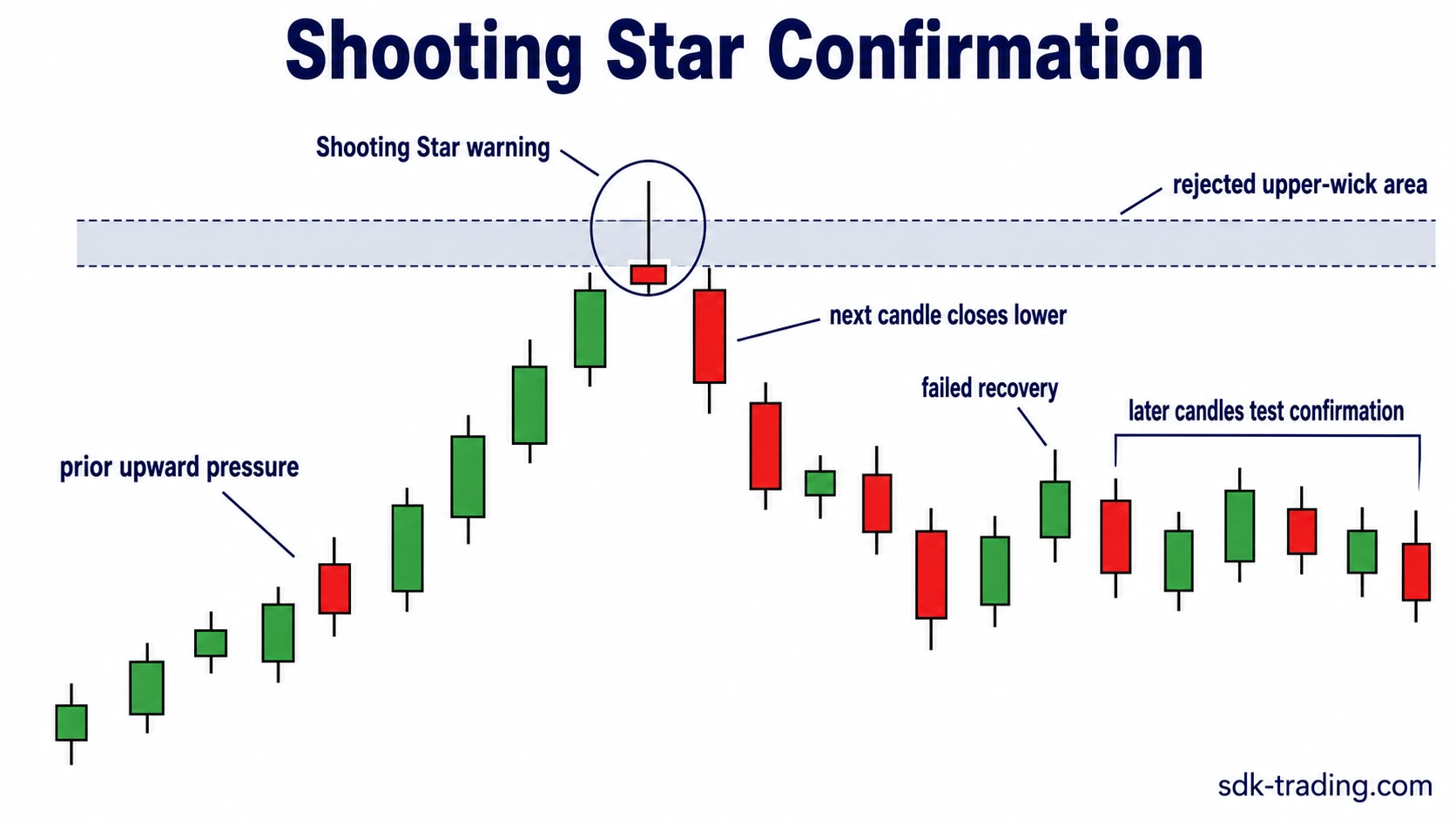
Confirmation boundary: a Shooting Star candlestick starts the question. Confirmation asks whether the market continues rejecting the upper area or quickly absorbs the rejection.
Key Points
- The upper wick is a warning, not confirmation by itself.
- Confirmation improves when the next candle closes lower after the Shooting Star.
- Failed recovery of the rejected upper-wick area matters more than candle color alone.
- Confirmation weakens when price reclaims the high or accepts back into the upper-wick zone.
- Location and volume can qualify the reading, but later price response remains the main test.
What Confirms a Shooting Star?
The first candle is the warning. The next candle is the confirmation check. A stronger sequence usually has upward pressure first, a Shooting Star that closes away from the high, failed recovery of the upper-wick area, and a lower next close.
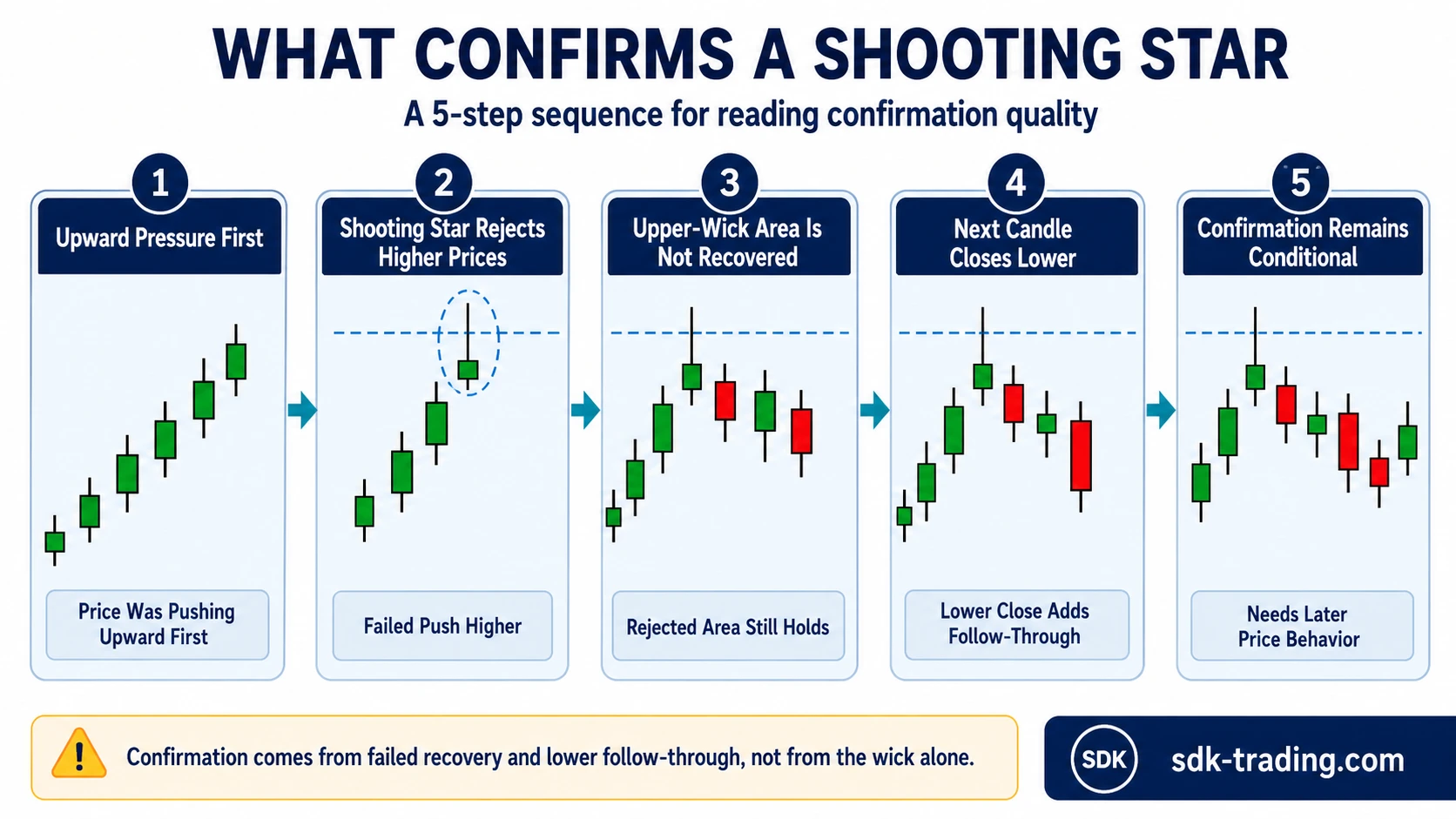
| Step | What it shows | Why it matters | |
|---|---|---|---|
| Prior upward pressure | Price moved into the Shooting Star before the warning candle formed. | The candle has a directional context instead of appearing in random noise. | |
| Shooting Star warning | Price pushed higher but closed away from the high. | The candle marks the rejected upper area. | |
| Failed recovery | The next candle does not reclaim the upper-wick area. | The rejected area remains active rather than immediately absorbed. | |
| Lower next close | The next candle closes lower after the Shooting Star. | The rejection has follow-through instead of only one-candle hesitation. | |
| Conditional reading | Later candles continue testing acceptance or rejection. | The pattern remains a diagnostic reading, lower after the Shooting Star. | The rejection has not a guaranteed outcome. |
Common Shooting Star Confirmation Misreads
The common error is treating a long upper wick as if it already confirms reversal pressure. The wick only says price traded higher and failed to stay there during that candle. Confirmation needs the next response.
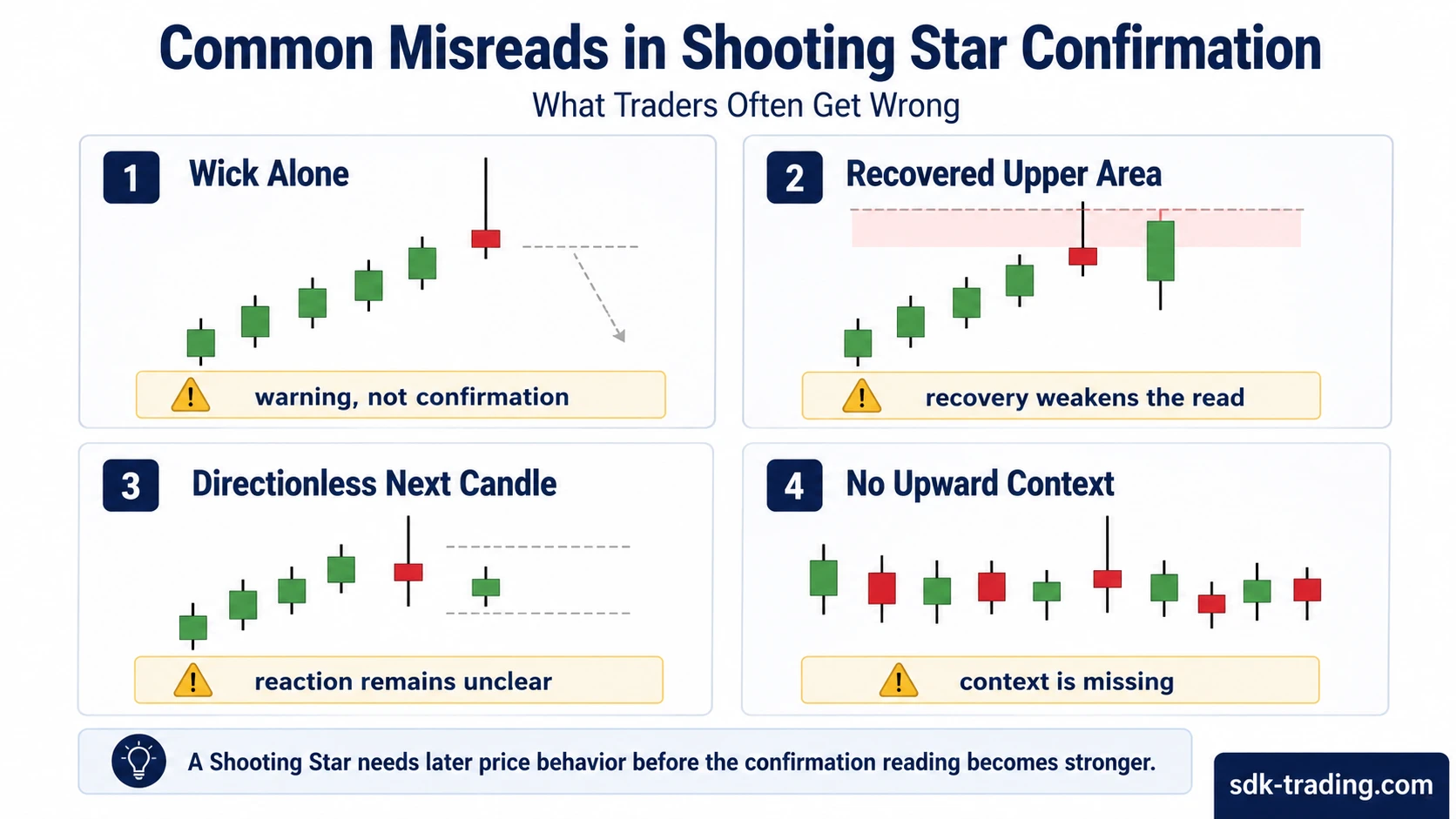
| Misread | Why it is weak | Cleaner interpretation |
|---|---|---|
| Wick alone | The candle warns of rejected higher prices, but later response is still unknown. | Treat it as a warning until recovery fails or lower follow-through appears. |
| Recovered upper area | Price moves back into the zone that was supposed to remain rejected. | The confirmation reading weakens because acceptance is returning. |
| Directionless next candle | A small inside candle does not show clean lower acceptance. | The reaction remains unresolved. |
| No upward context | The candle appears without a clear prior push or supply test. | The shape has less confirmation value because context is missing. |
The distinction also separates rejection from broader indecision. A Doji candlestick can reflect balance or hesitation, while Shooting Star confirmation depends on failed recovery and lower follow-through after an upper rejection.
Confirmation Quality Checklist
Confirmation quality improves when structure, location, and follow-through point in the same direction. The next candle matters most, but the reading becomes cleaner when the Shooting Star appears after upward pressure and the rejected high is not reclaimed.
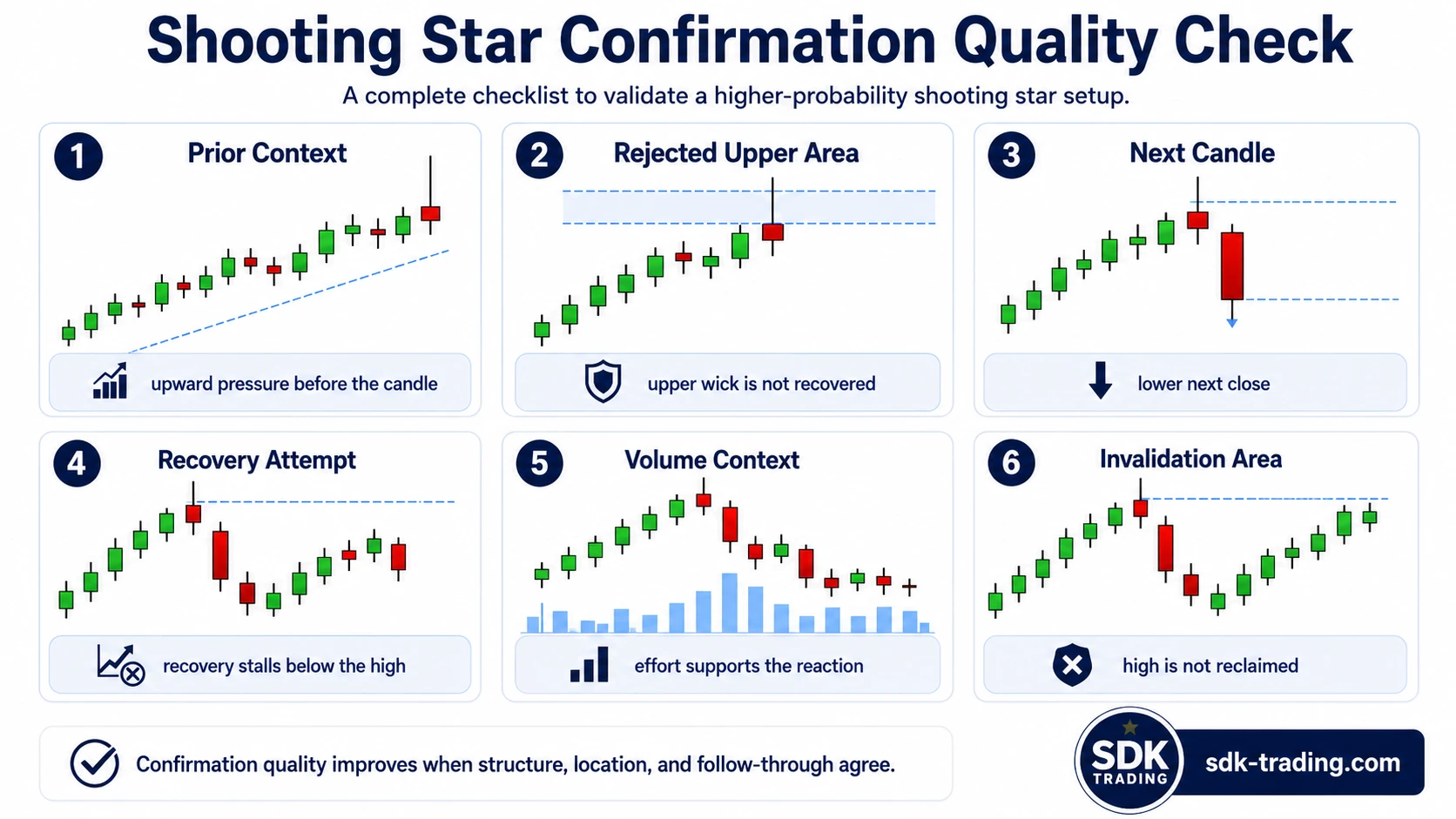
| Factor | Stronger confirmation | Weaker confirmation |
|---|---|---|
| Prior context | Appears after upward pressure or near supply. | Forms in flat, random, or noisy price action. |
| Rejected upper area | The upper-wick zone is not recovered quickly. | Price moves back into the rejected upper-wick area. |
| Next candle | Closes lower after the Shooting Star. | Stays directionless, closes inside the range, or reclaims the high. |
| Recovery attempt | Recovery stalls below the prior high. | Recovery pushes through the rejected area. |
| Volume context | Effort supports the rejection or follow-through. | Participation is weak, mixed, or unclear. |
| Invalidation area | The Shooting Star high is not reclaimed. | Price closes strongly above the rejected area. |
Why the Next Candle Matters
The next candle tests whether the rejected upper-wick area remains rejected. A lower close suggests that the market did more than print a warning candle. It also failed to rebuild acceptance near the prior high.
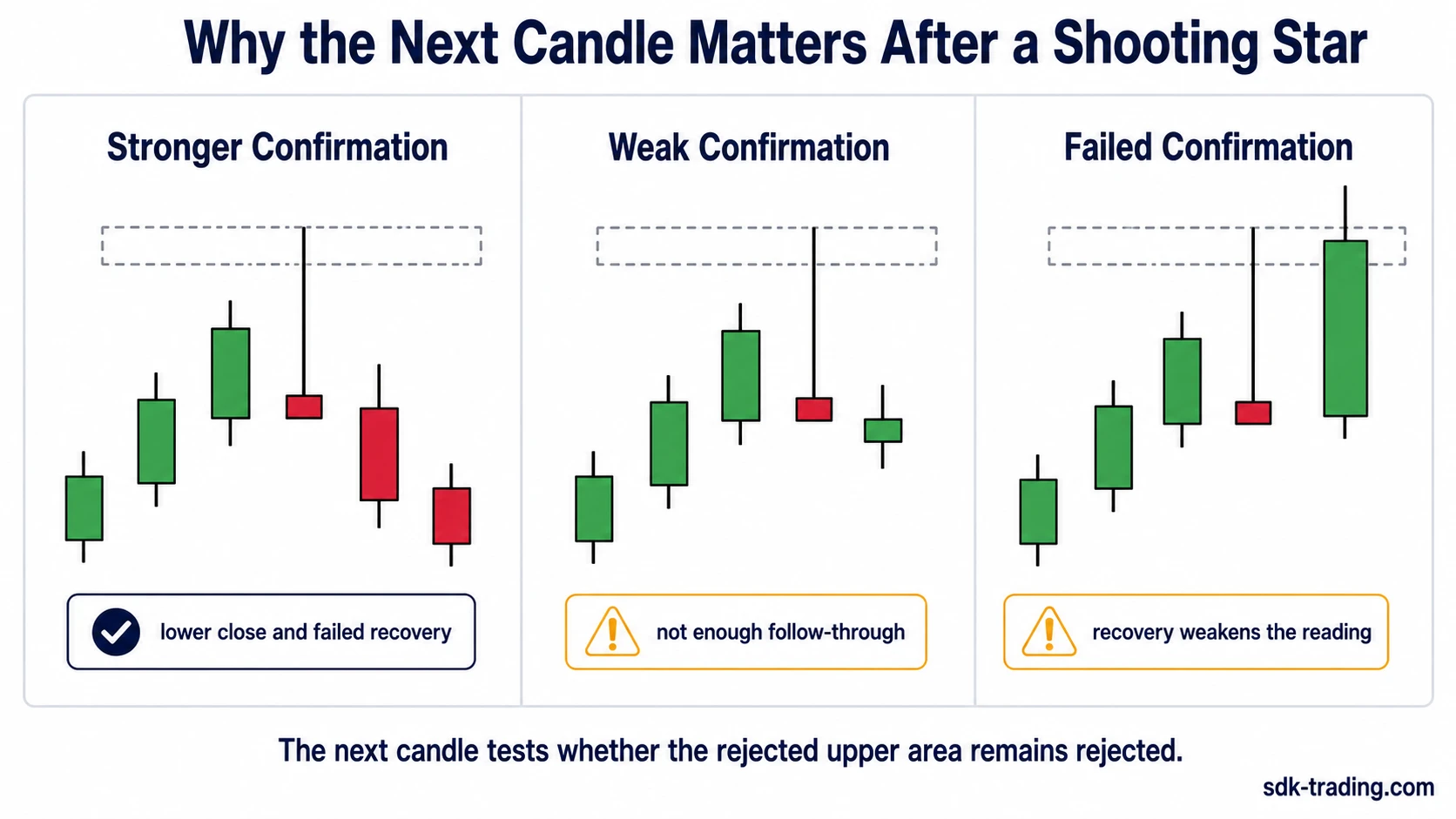
A small, directionless next candle gives less information. It may show hesitation, but it does not clearly confirm that lower prices are being accepted. A candle that reclaims the upper-wick area weakens the reading because the rejected zone is being tested again instead of abandoned.
When Shooting Star Confirmation Fails
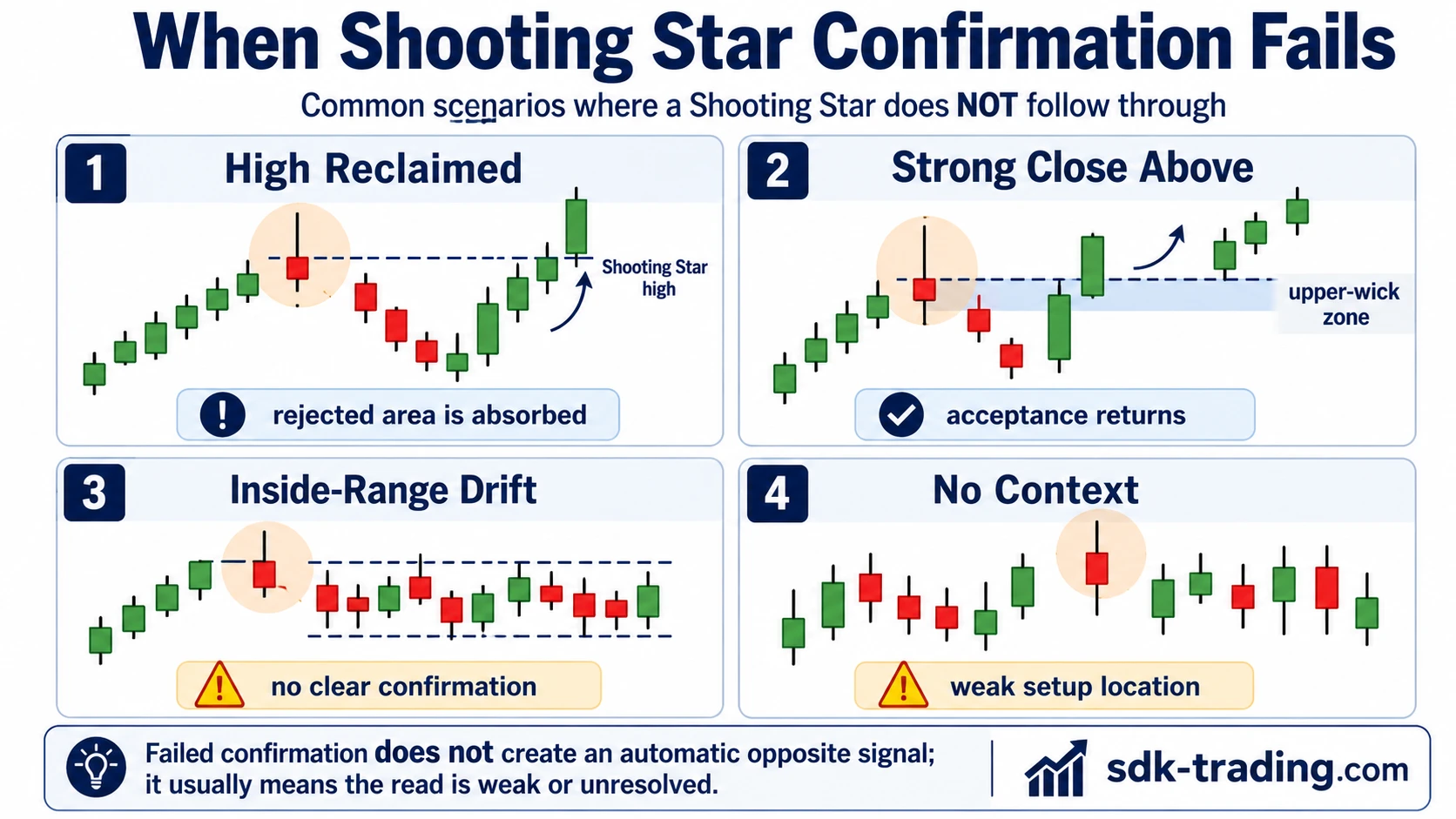
Shooting Star confirmation fails or weakens when price absorbs the rejected area. The clearest failure condition is a later close above the Shooting Star high, because price is no longer treating the upper wick as a rejected extreme.
| Failure condition | What it means | Safer reading |
|---|---|---|
| High reclaimed | Price closes above the Shooting Star high. | The rejected area has been absorbed. |
| Strong close above | The follow-up candle accepts above the upper-wick zone. | The confirmation reading weakens sharply. |
| Inside-range drift | Small candles stay inside the Shooting Star range. | The reaction remains unresolved rather than confirmed. |
| No context | The upper-wick candle forms without upward pressure or supply context. | The location is too weak for a strong confirmation read. |
Unresolved Shooting Star Confirmation Example
An unresolved case starts with a valid warning but no decisive follow-through. Price advances into an upper reference area, a Shooting Star forms, and the candle closes away from the high. The warning exists, but the next candles remain close to the range instead of clearly rejecting it or accepting above it.
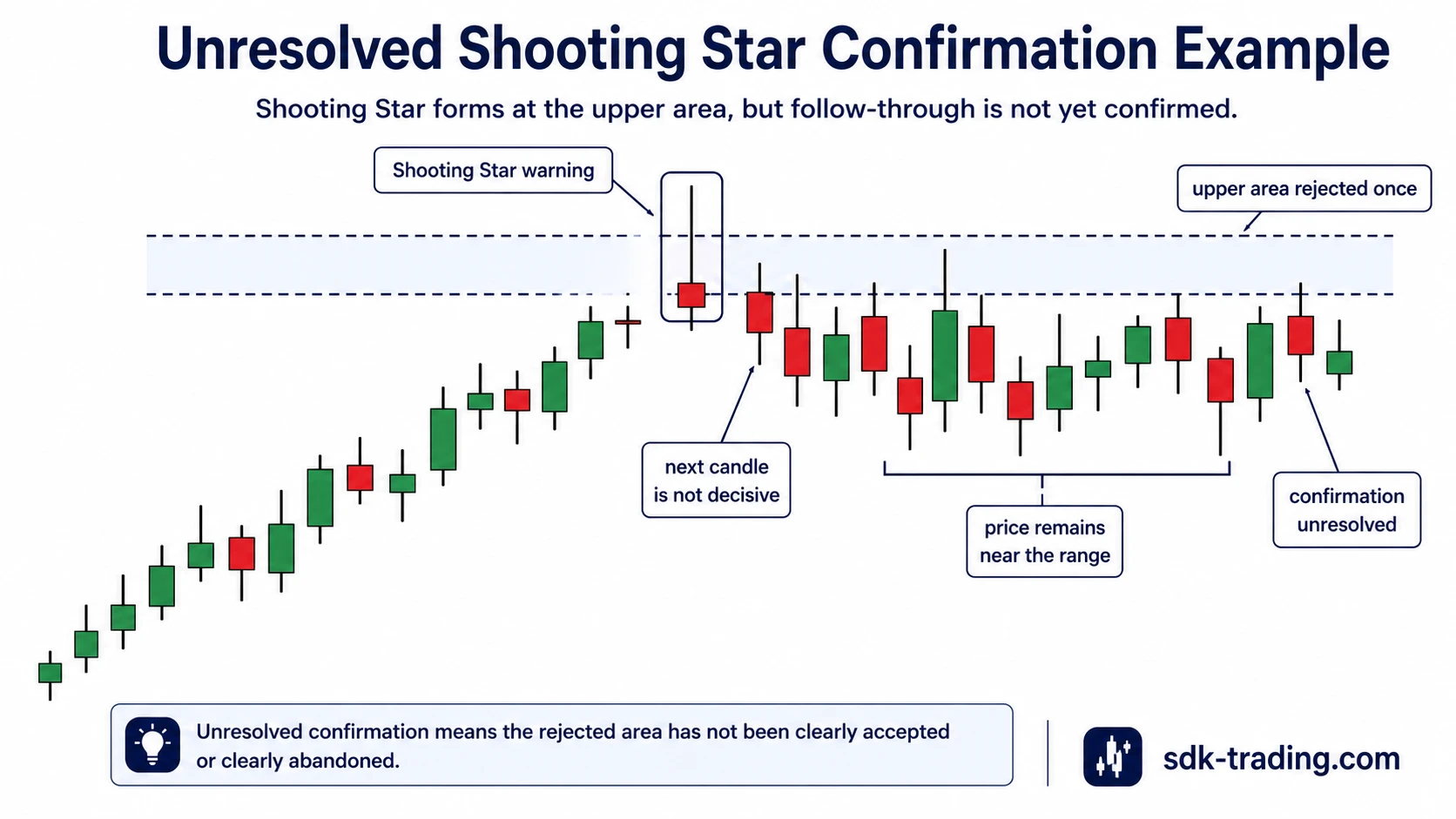
The first candle warns that higher prices were tested and rejected once. The next candle, however, does not close decisively lower. Later candles remain near the same range. That behavior leaves the reading open: the upper area has not been cleanly accepted, but it has also not been clearly abandoned.
Cleaner confirmation requires failed recovery near the rejected area and a lower close after the Shooting Star. The unresolved version appears when price stays near the candle range and keeps the same area active.
Volume and Location as Confirmation Modifiers
Volume and location do not replace next-candle behavior, but they can qualify the reading. A Shooting Star near a visible supply area carries more useful context than the same candle inside random sideways movement.
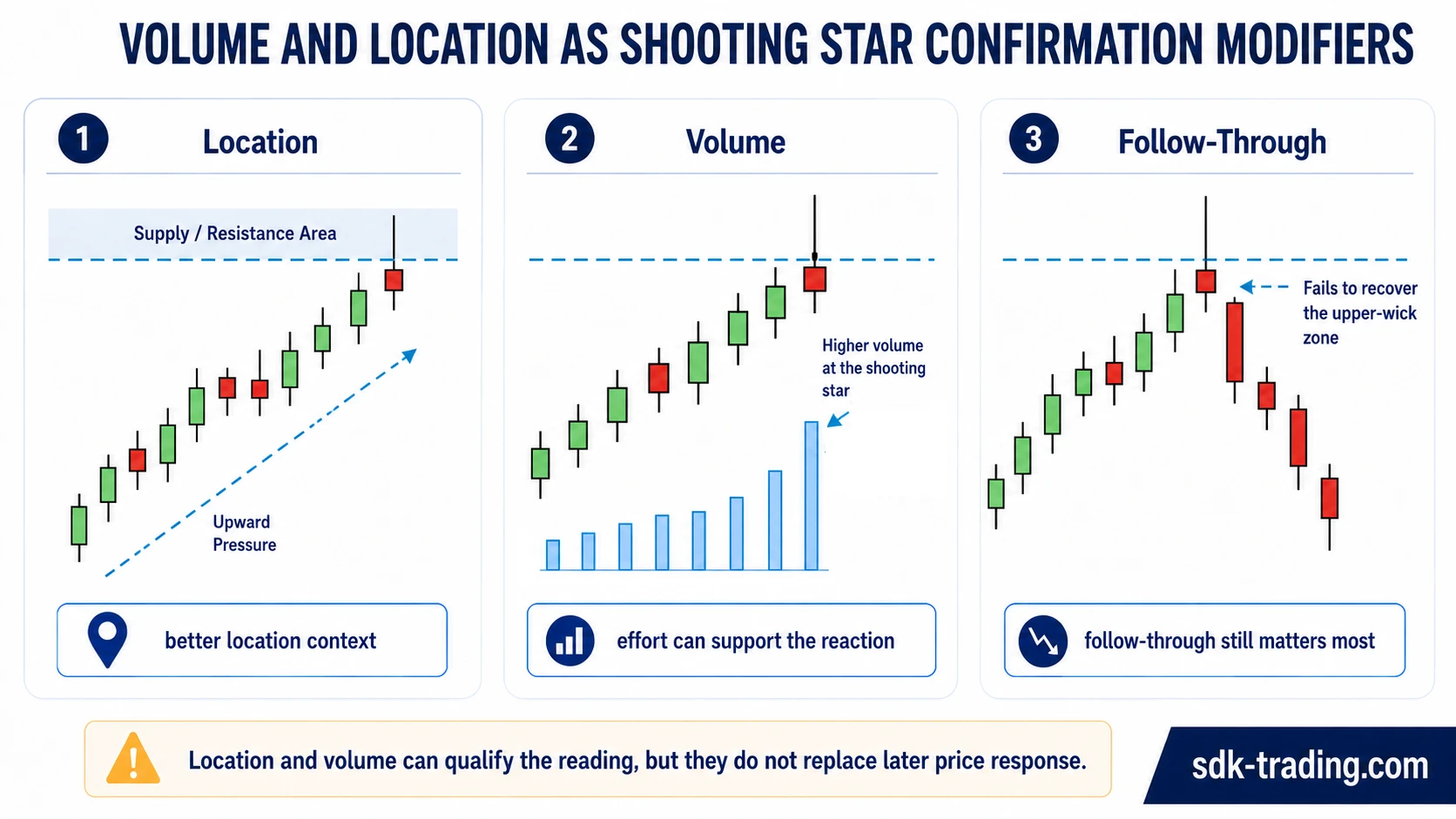
Higher volume during rejection or lower follow-through can support the idea that the market reacted meaningfully to higher prices. Low or unclear participation makes the candle easier to misread, especially when the next candle fails to close lower.
Best use: read volume and location as modifiers. The core confirmation still comes from failed recovery, lower follow-through, and the rejected area not being reclaimed.
FAQ
Is a long upper wick enough to confirm a Shooting Star?
No. A long upper wick can warn that price rejected higher levels, but confirmation becomes stronger only when later price action fails to recover the rejected area and the next candle closes lower.
What should the next candle do after a Shooting Star?
The next candle gives stronger confirmation when it closes lower and does not reclaim the upper-wick area. That behavior suggests the rejection was followed by weaker acceptance at higher prices.
Does volume matter for Shooting Star confirmation?
Volume can help qualify the reading. Expanded volume during rejection or follow-through can support the interpretation, while weak or unclear volume makes the candle easier to misread.
When does Shooting Star confirmation fail?
Confirmation weakens when price reclaims the high, closes strongly above the rejected area, or follows the candle with small directionless price action instead of lower follow-through.