A Shooting Star in an uptrend is a warning candle, not proof that the trend has ended. The reading becomes more useful when the upper wick tests a prior swing-high area, closes back below that area, and later candles fail to reclaim the rejected zone.
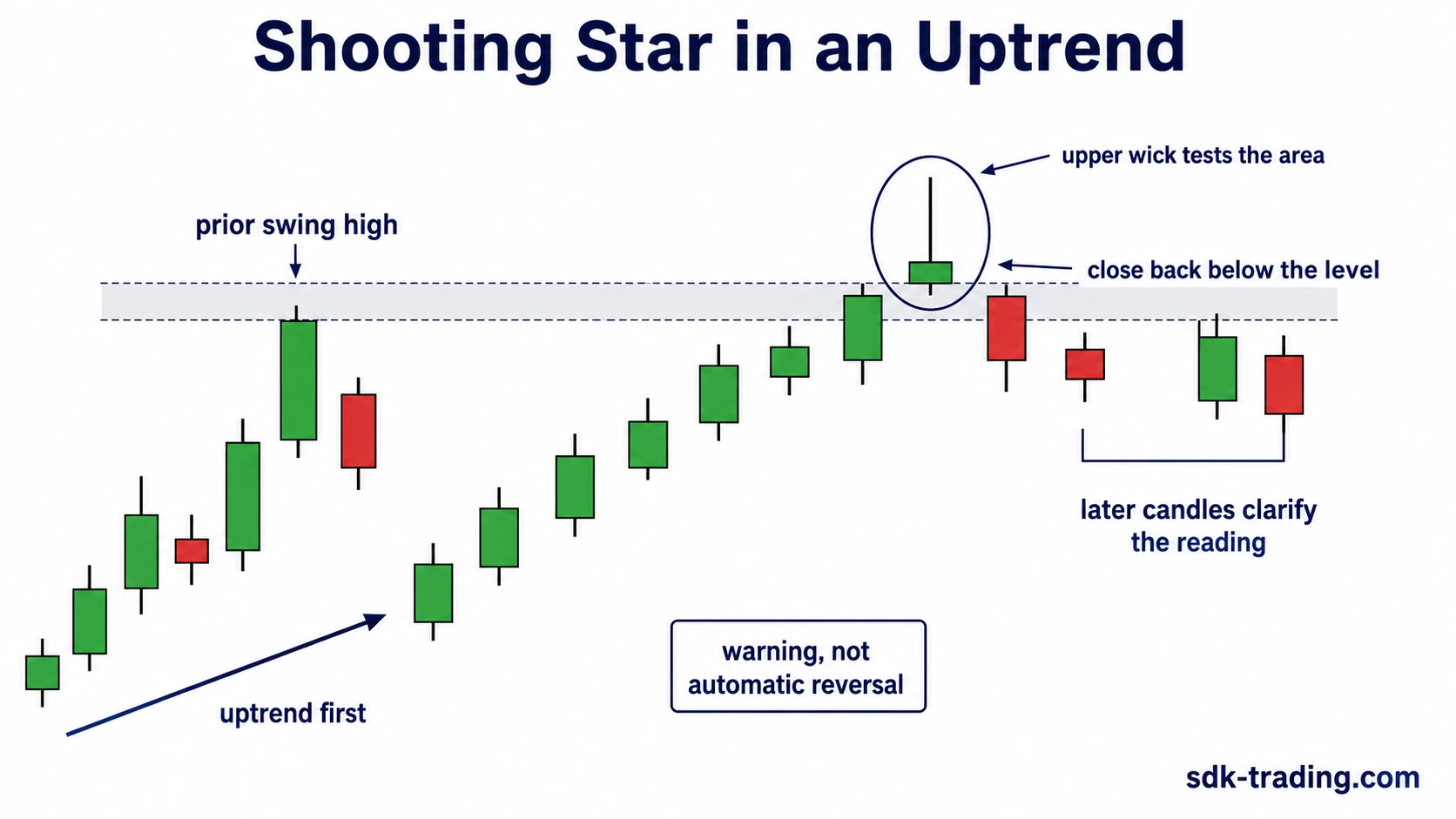
Interpretation boundary: the candle warns that higher prices were tested and not held. It does not confirm that the uptrend has reversed unless later behavior supports the rejection.
Key Points
- A Shooting Star in an uptrend carries more weight when it forms near a visible prior swing high.
- The upper wick matters because it shows that price traded above the reference area but did not hold there.
- A close back below the tested area can show failed upside acceptance, not a confirmed trend reversal.
- Later candles decide whether the rejection holds, remains unresolved, or gets absorbed.
- The reading weakens if price reclaims the rejected upper-wick area and holds above the prior high.
Not Automatic Reversal, but Failed Acceptance
The common mistake is treating the candle as proof that the advance is finished. A cleaner interpretation is narrower: price tested higher levels during the candle, failed to hold them, and closed away from the upper extreme.
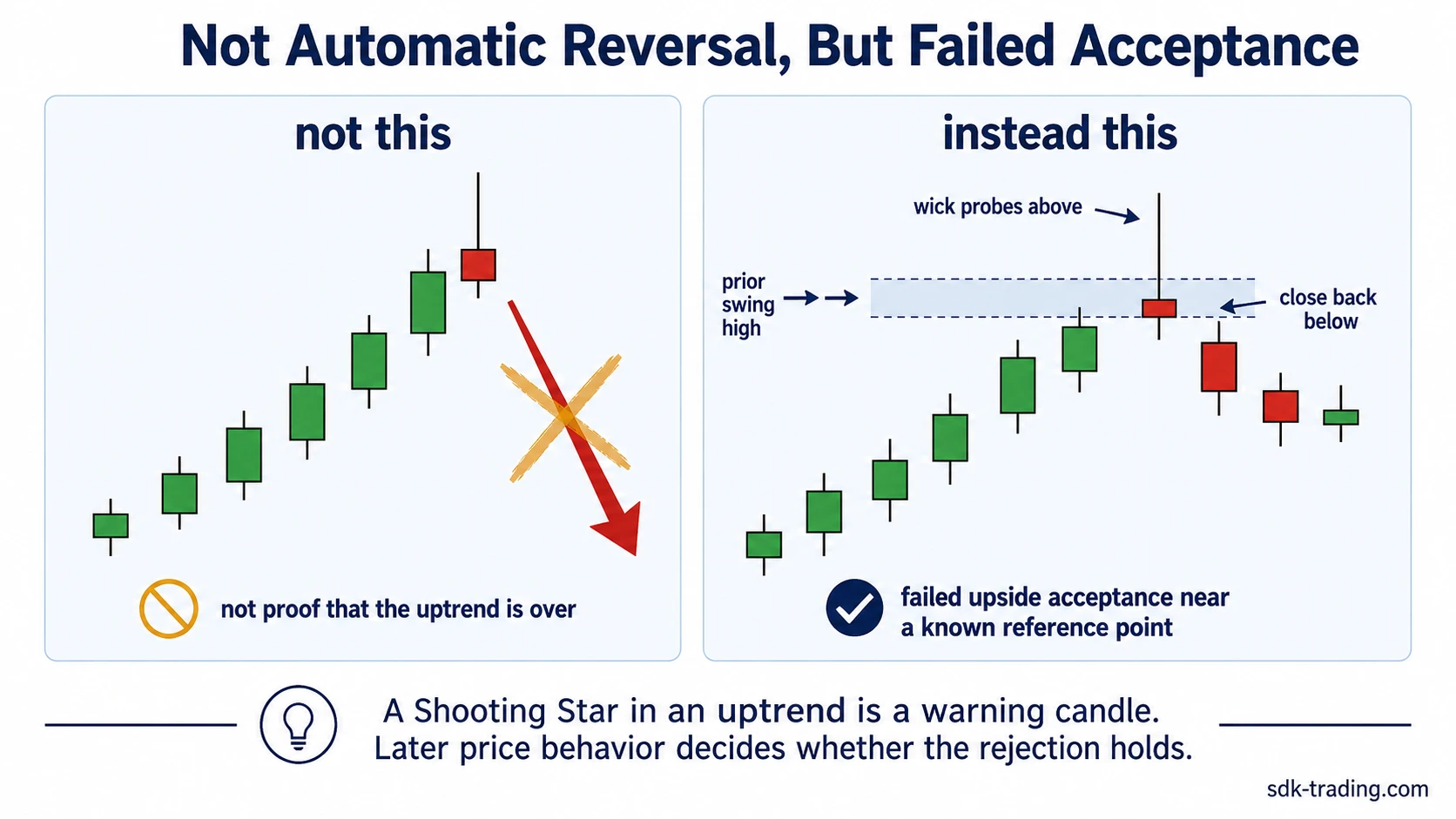
An uptrend can produce upper wicks during normal expansion. The candle becomes more useful when the wick interacts with a known reference area rather than appearing randomly in open space.
What the Upper Wick Tests in an Uptrend
A prior swing high gives the market a visible reference point. Traders can see where price previously paused, rejected, or failed to continue. When a later rally pushes through that area but closes back below it, the upper wick shows that higher prices were reached but not accepted.
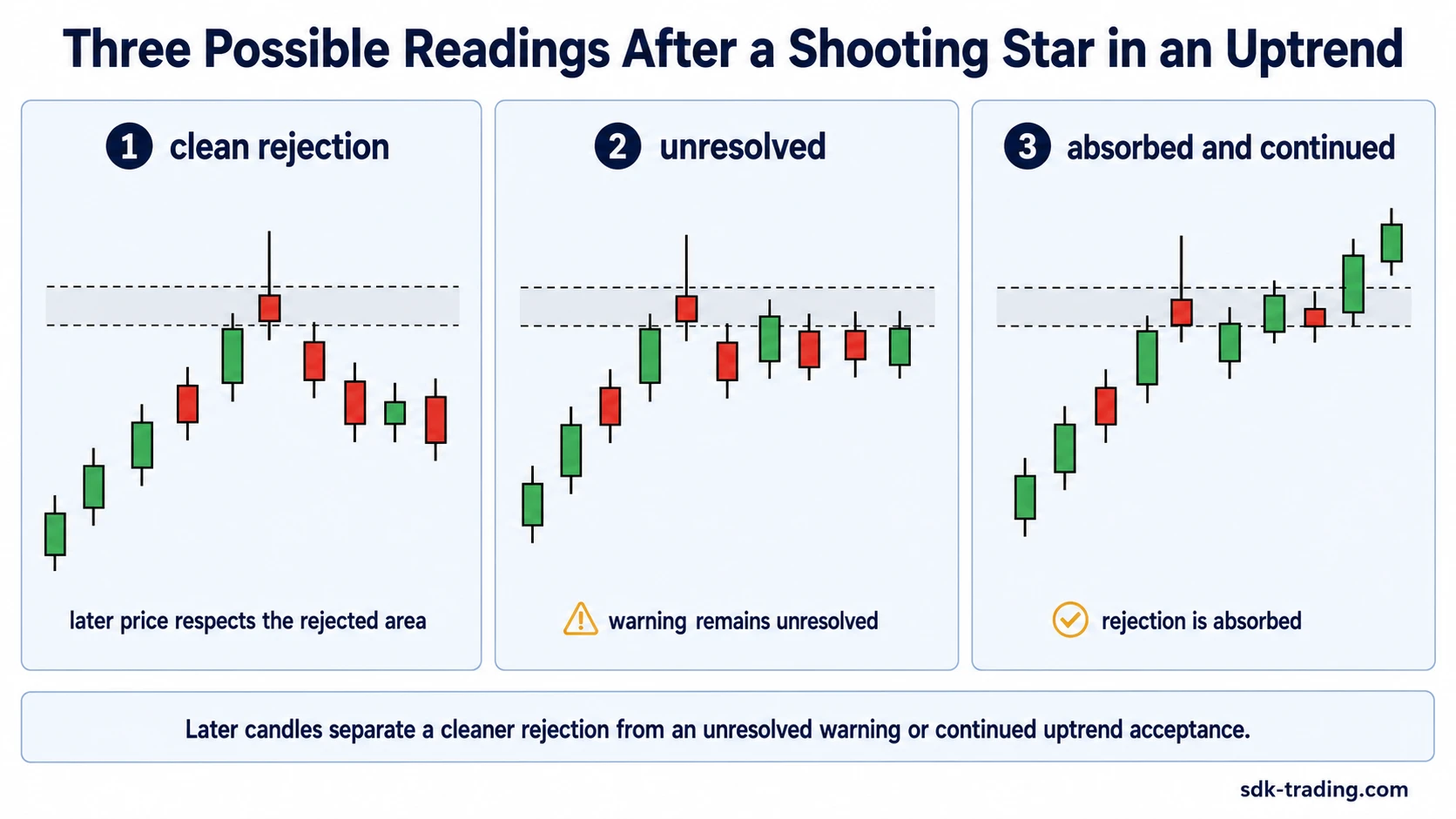
The core Shooting Star candlestick shape still matters: a dominant upper wick, a small real body near the lower part of the range, and a close away from the high. In an uptrend, the location of that shape is what changes the quality of the interpretation.
Three Possible Readings After the Candle
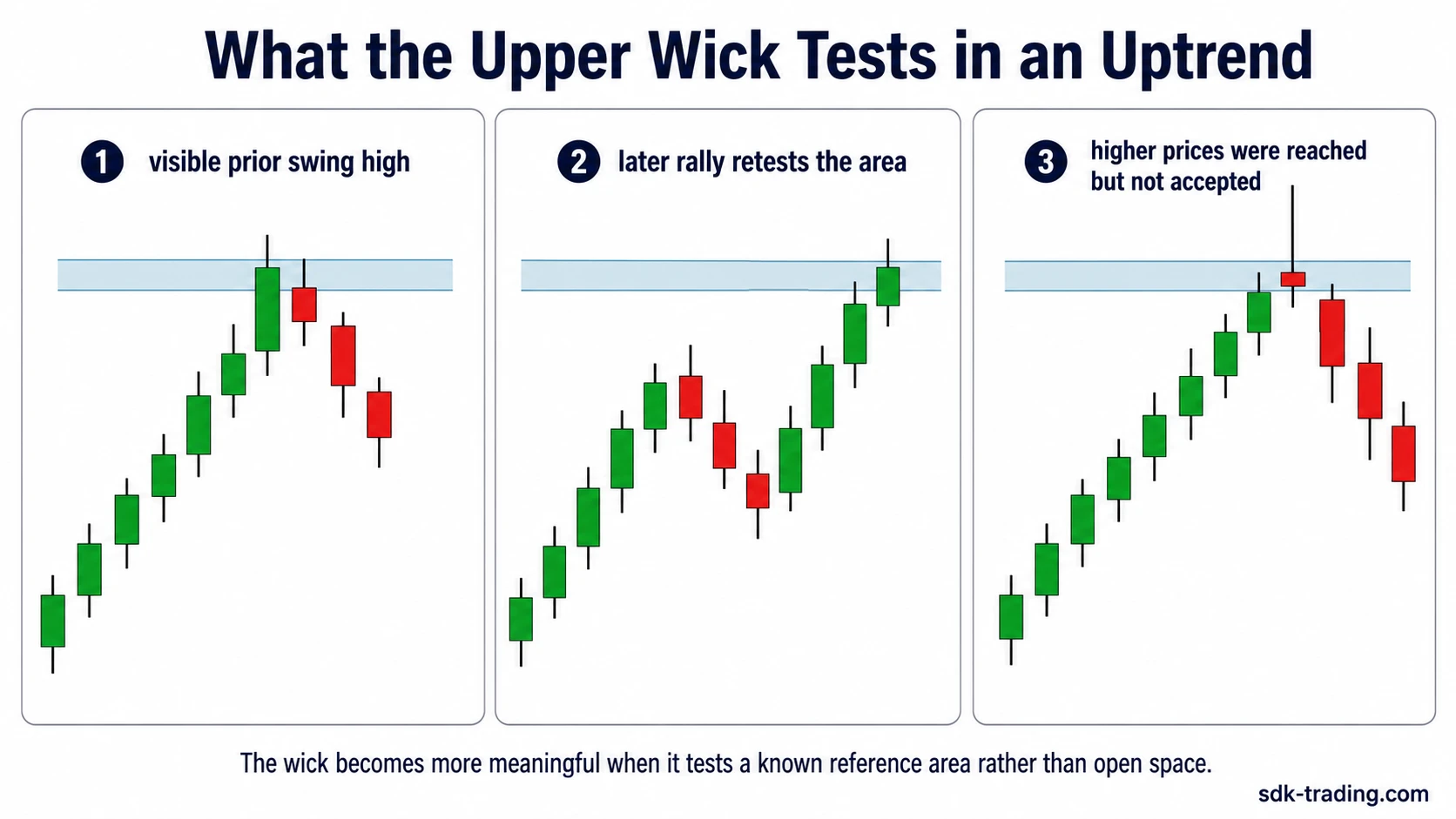
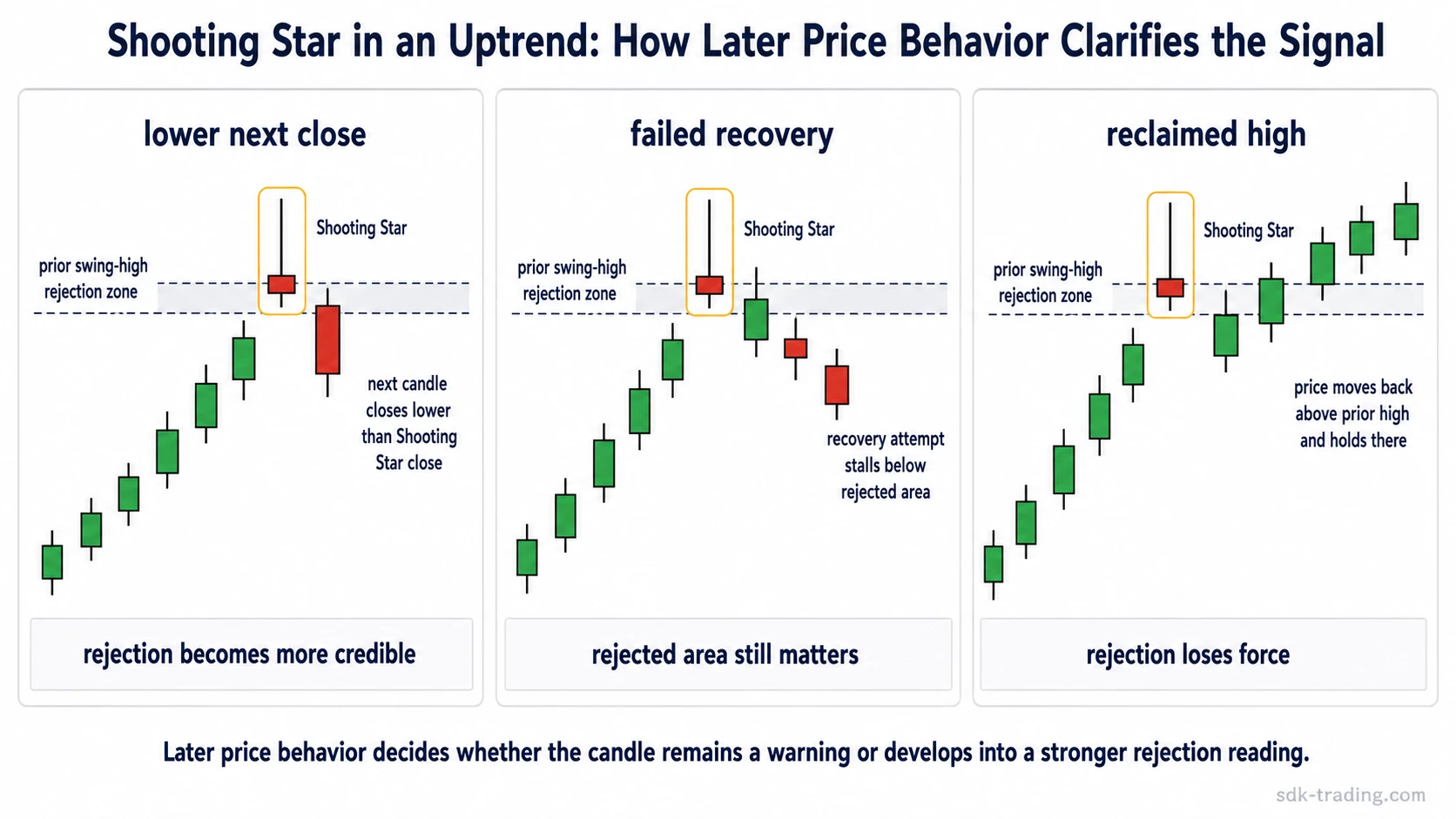
The same Shooting Star can lead to different readings depending on what follows. A clean rejection, an unresolved warning, and an absorbed rejection can all begin with a similar upper-wick candle.
| State | What it means | What changes the reading |
|---|---|---|
| Clean rejection near prior high | The wick probes the prior high and price closes back below the tested area. | Stronger if later candles fail to reclaim the rejected upper-wick area. |
| Unresolved warning | The wick shows rejection, but later candles stay close to the range. | Needs more price behavior before the interpretation becomes more defensible. |
| Absorbed rejection and continuation | Later candles reclaim the rejected zone and hold above it. | Weakens the bearish reading because supply near the prior high may have been absorbed. |
Common Mistake: Treating the Candle as Proof
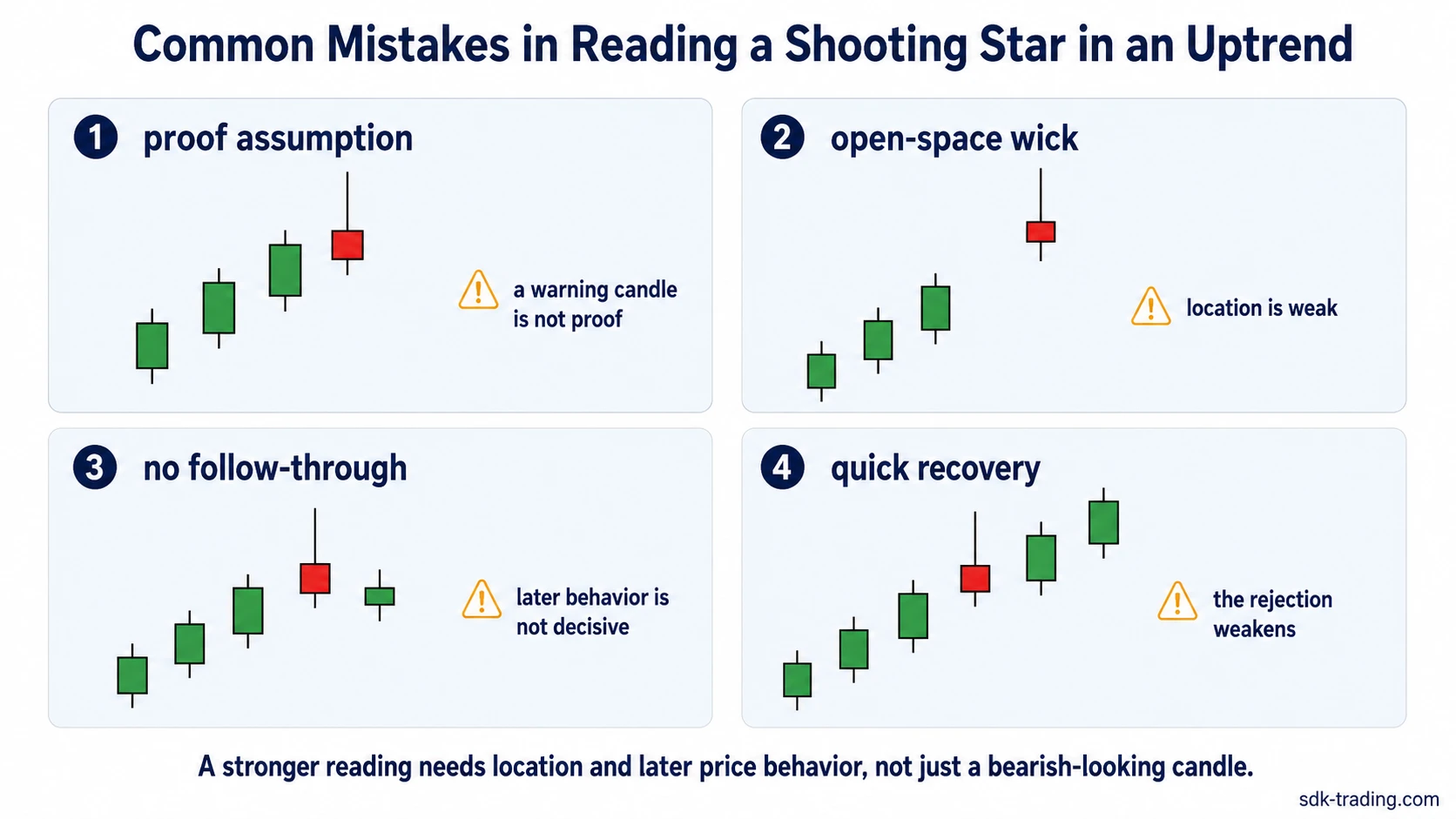
The main mistake is reading the candle as a complete reversal statement. A Shooting Star can warn that upside pressure failed near a prior high, but it does not prove that trend control has shifted.
| Mistake | Why it is weak | Cleaner reading |
|---|---|---|
| Proof assumption | The candle is treated as proof that the uptrend is over. | Read it as a warning until later candles confirm or weaken the rejection. |
| Open-space wick | The wick forms away from a clear prior swing high or reference area. | Location is weak, so the candle carries less diagnostic value. |
| No follow-through | The next candle is small, mixed, or directionless. | The warning remains unresolved. |
| Quick recovery | Price quickly moves back above the rejected upper area. | The rejection loses force because acceptance has returned. |
How Later Price Behavior Clarifies the Reading
Later price behavior separates a warning candle from a stronger rejection reading. A lower next close can make the rejection more credible. A failed recovery into the rejected area can also show that the prior high is still acting as a meaningful reference.
The opposite reading appears when price moves back into the wick area and holds above the prior high. That recovery suggests the rejection did not create lasting weakness. In that case, the candle may have marked temporary hesitation rather than a stronger rejection.
Practical boundary: a candle can warn, but structure decides whether the warning becomes more meaningful, remains unresolved, or gets absorbed.
Shooting Star in an Uptrend Prior High Example
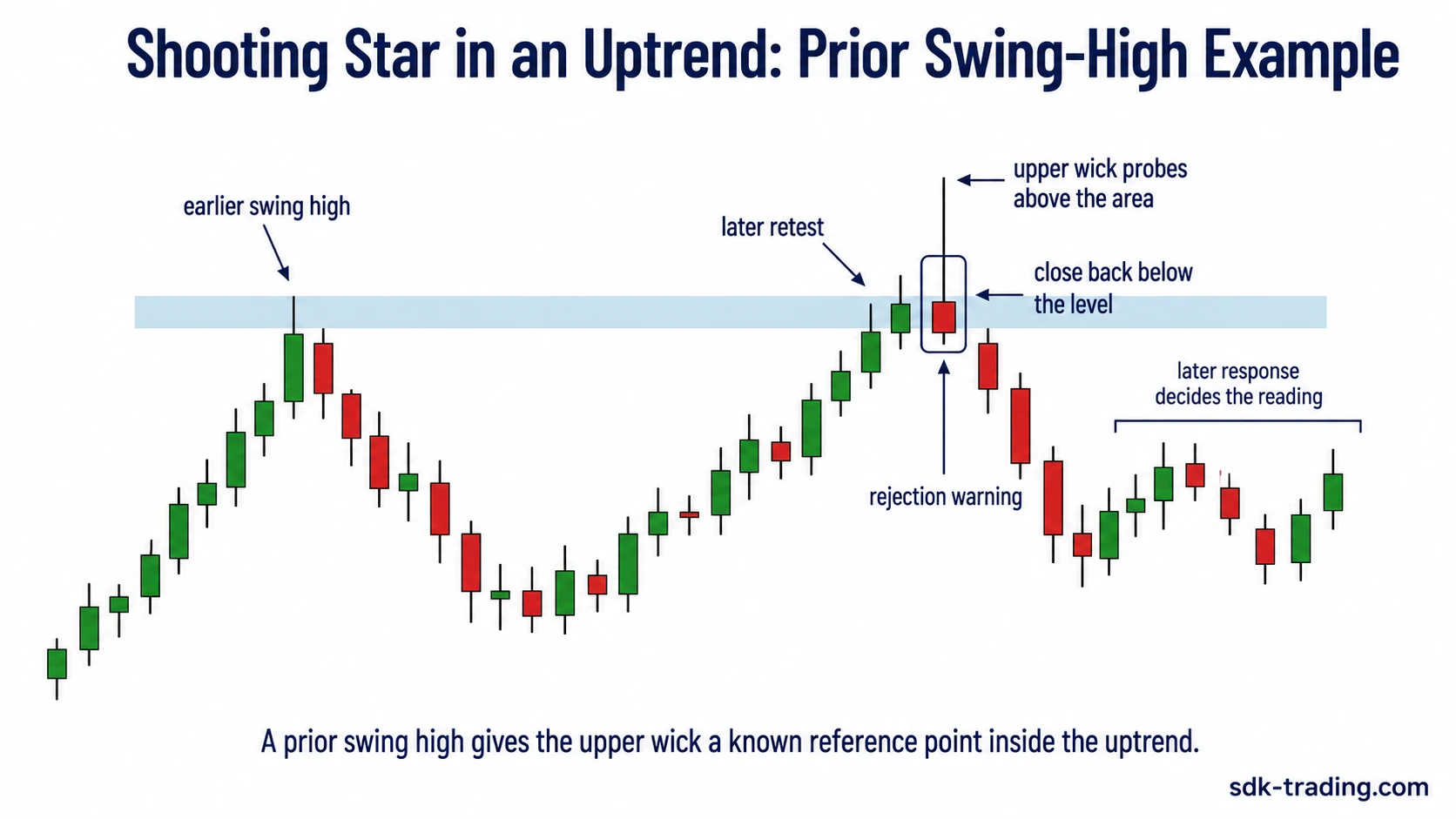
A practical chart example starts with an established uptrend and an earlier swing high. When price later rallies back into that same area, the upper wick has a clear reference point. The candle is no longer just an isolated shape. It is testing a level the market has already recognized.
The earlier swing high marks the first reference area. The later rally retests that area and briefly probes above it. The Shooting Star closes back below the level, which shows failed upside acceptance during that candle. The later candles then decide whether the area remains rejected or becomes accepted again.
How It Differs From Nearby Candlestick Ideas
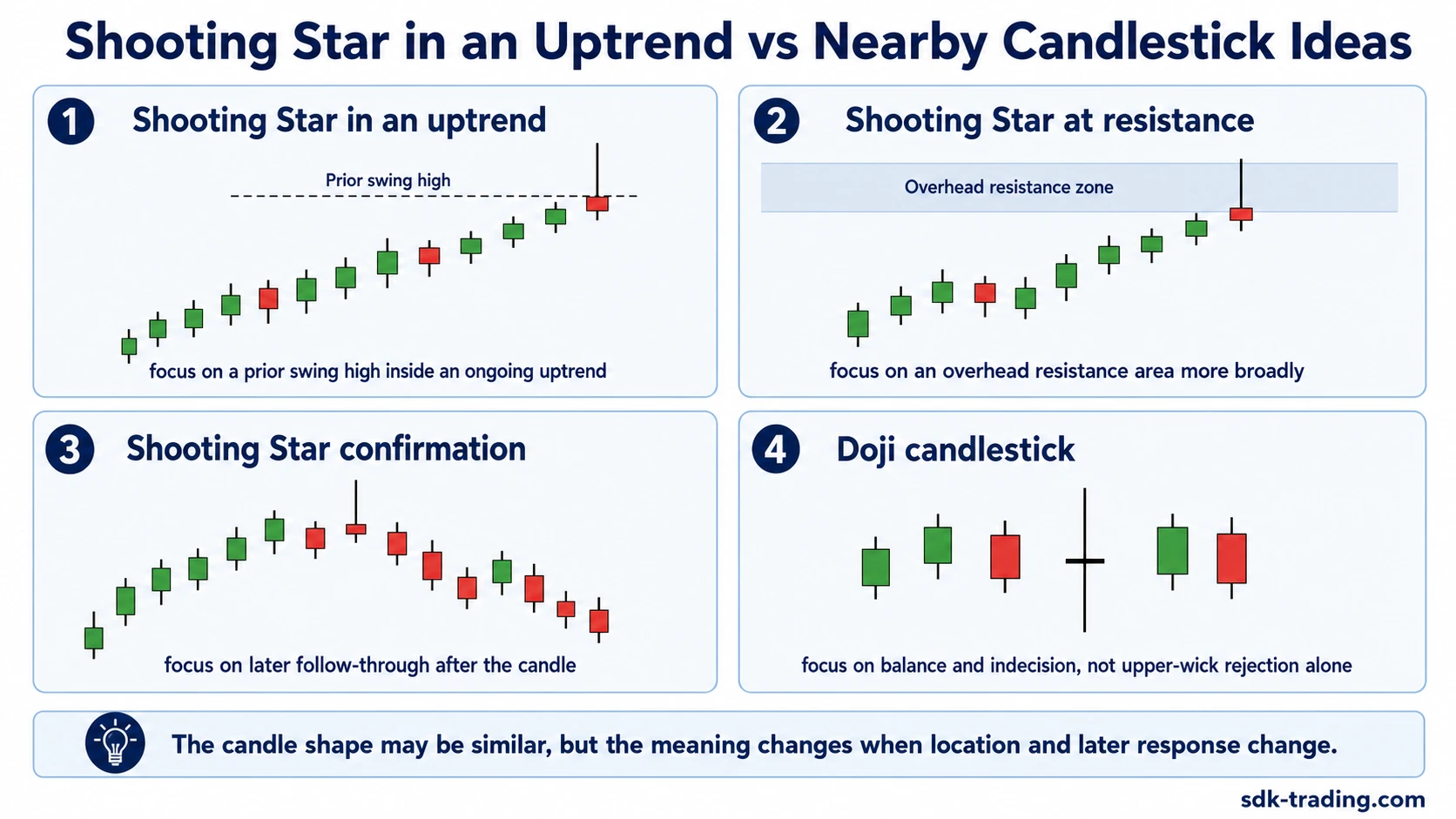
The basic Shooting Star idea is about candle anatomy. The uptrend reading is about where that anatomy appears and whether the upper wick rejects a prior high inside an existing advance.
A Shooting Star at resistance is broader because resistance can come from many structures. A prior swing high inside an uptrend is narrower because price is testing a level created by the trend itself.
Confirmation is separate. A lower close, failed reclaim, or continued rejection can strengthen the reading, but the first candle alone does not complete that sequence. A Doji candlestick is different because it centers on open-close balance and indecision, while this reading depends on a dominant upper wick and a failed hold above a known area.
FAQ
Is a Shooting Star in an uptrend always bearish?
No. It can warn that upside pressure failed near a prior high, but the reading depends on later price behavior. If price reclaims the rejected area, the bearish interpretation weakens.
Why does the prior swing high matter?
A prior swing high turns the upper wick into a test of a known area where price already paused or failed to continue. Without that reference point, the same candle can be harder to separate from normal uptrend volatility.
What weakens a Shooting Star reading in an uptrend?
The reading weakens when price quickly moves back into the upper-wick area, holds above the prior high, or continues higher without showing follow-through weakness.
Can price continue higher after a Shooting Star in an uptrend?
Yes. If later candles absorb the rejection and hold above the tested area, the candle may represent temporary hesitation rather than a stronger rejection.