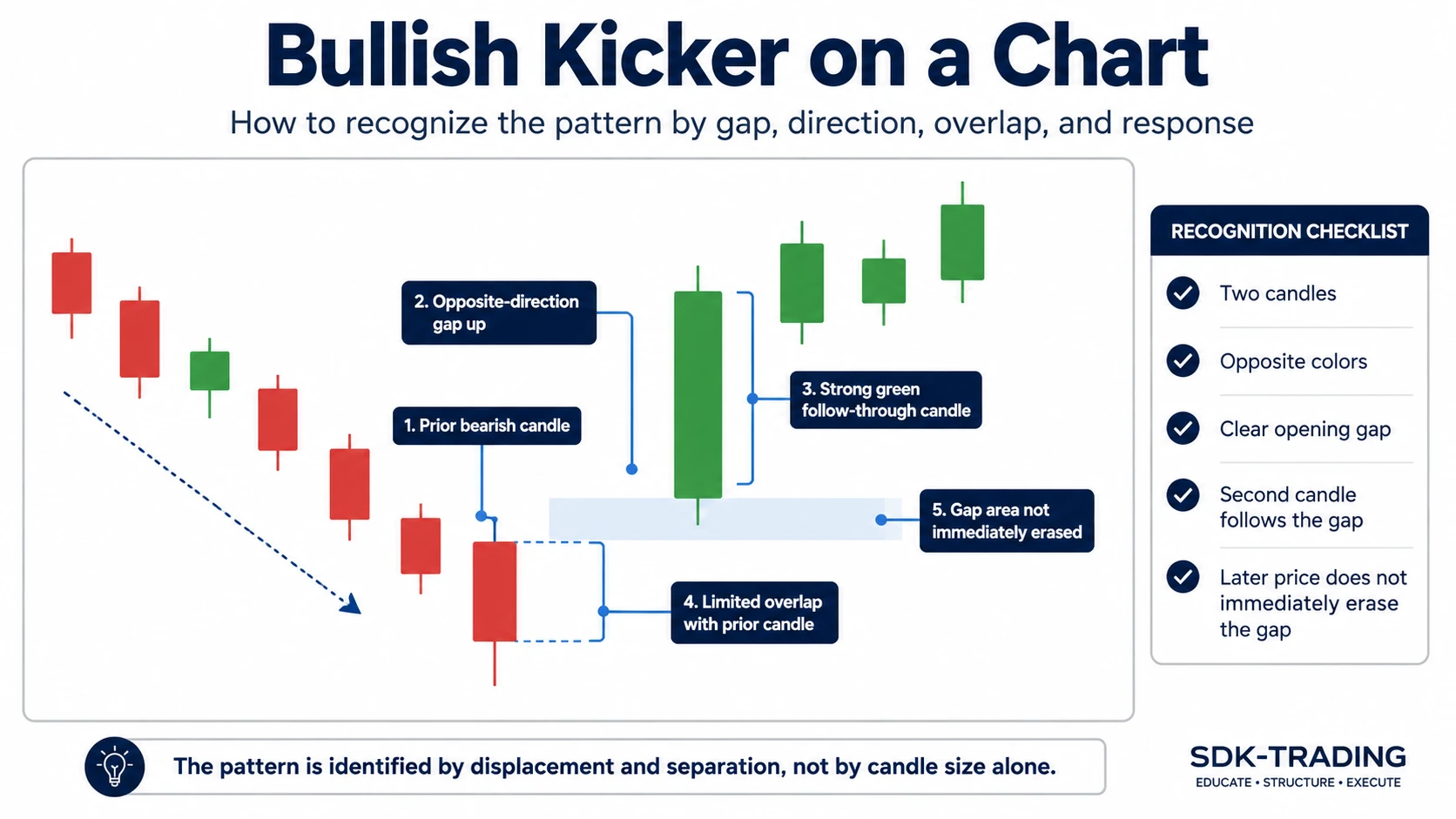
A kicker candlestick pattern is a two-candle trading pattern where the second candle opens sharply away from the first candle in the opposite direction, leaving clear separation or limited overlap. The opening gap creates the main structure: price does not simply continue from the prior candle; it starts the next candle from a displaced level.
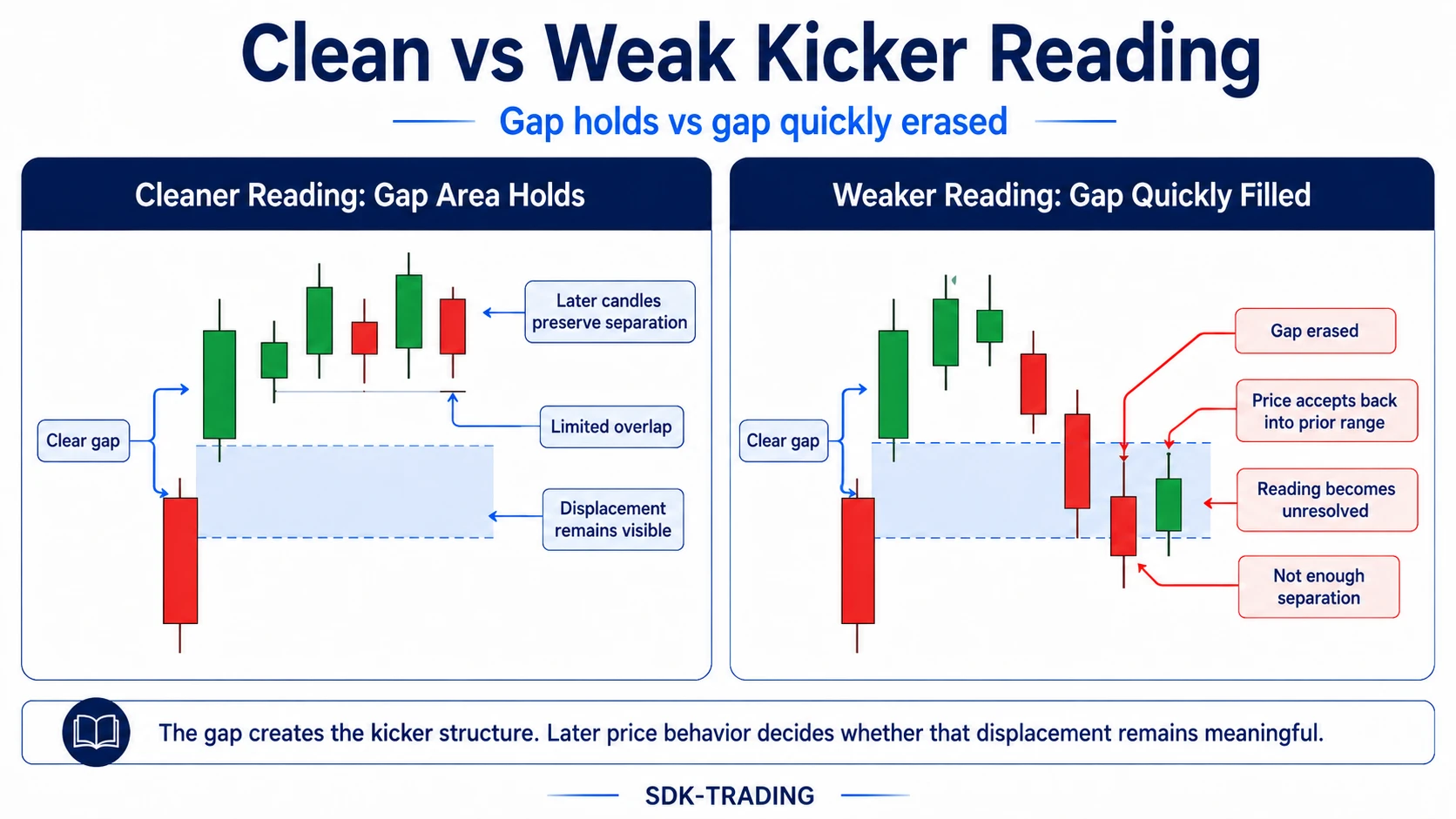
The gap is useful only if the market maintains enough separation from the prior candle. If price quickly fills the opening gap and accepts back into the earlier range, the kicker reading weakens because the displacement did not hold.
Fast read: a kicker candlestick pattern needs an opposite-direction opening gap, a strong second candle, and later price behavior that does not immediately erase the gap. The pattern is a visible displacement event, not a standalone trading signal.
Key Points
- A kicker candlestick pattern uses two candles, not one isolated candle.
- The second candle opens with an opposite-direction gap away from the first candle.
- Bullish and bearish versions mirror the same displacement logic in opposite directions.
- A quick gap fill weakens the reading because separation from the prior candle fails.
- The pattern needs surrounding market structure and later response before it carries much weight.
What Is a Kicker Candlestick Pattern?
A kicker candlestick pattern in trading is a two-candle gap-displacement structure. The first candle reflects one directional state, then the next candle opens away from that prior candle in the opposite direction and continues from the displaced opening.
The defining feature is not simply a strong second candle. The kicker label needs opposite-direction repricing between the two candles. That separates it from an ordinary gap, a large momentum candle, or a continuation candle that only extends the prior direction.
Because the pattern depends on a gap, its appearance can vary by market, session structure, chart settings, and whether the instrument trades continuously. The cleaner the separation between the two candles, the easier the structure is to read. If the gap is quickly filled, the kicker reading weakens because the market has accepted back into the area that was supposed to remain displaced.
How the Kicker Structure Forms
The kicker structure forms when the next candle begins from a new price area instead of overlapping naturally with the prior candle. The second candle then extends in the opposite direction, creating a sharp change in visible control.
| Sequence | What to observe | Why it matters |
|---|---|---|
| First candle | A directional candle forms before the gap. | It gives the second candle a prior state to reject or displace. |
| Opening gap | The next candle opens away from the first candle in the opposite direction. | The gap creates the pattern’s main separation from ordinary continuation. |
| Second candle | The second candle moves in the direction of the gap. | Follow-through shows that the displaced open was not immediately rejected. |
| Overlap check | The two candles show limited overlap, especially near the gap area. | Less overlap makes the displacement cleaner and easier to interpret. |
| Later response | Price holds, tests, or fills the gap after the pattern. | Later behavior decides whether the displacement remains meaningful. |
The pattern is cleanest as a structural observation when the gap and second candle point in the same direction without being quickly erased. A gap without directional follow-through is incomplete, while a large second candle without a clear gap may belong to a different candlestick reading.
Bullish vs Bearish Kicker Candles
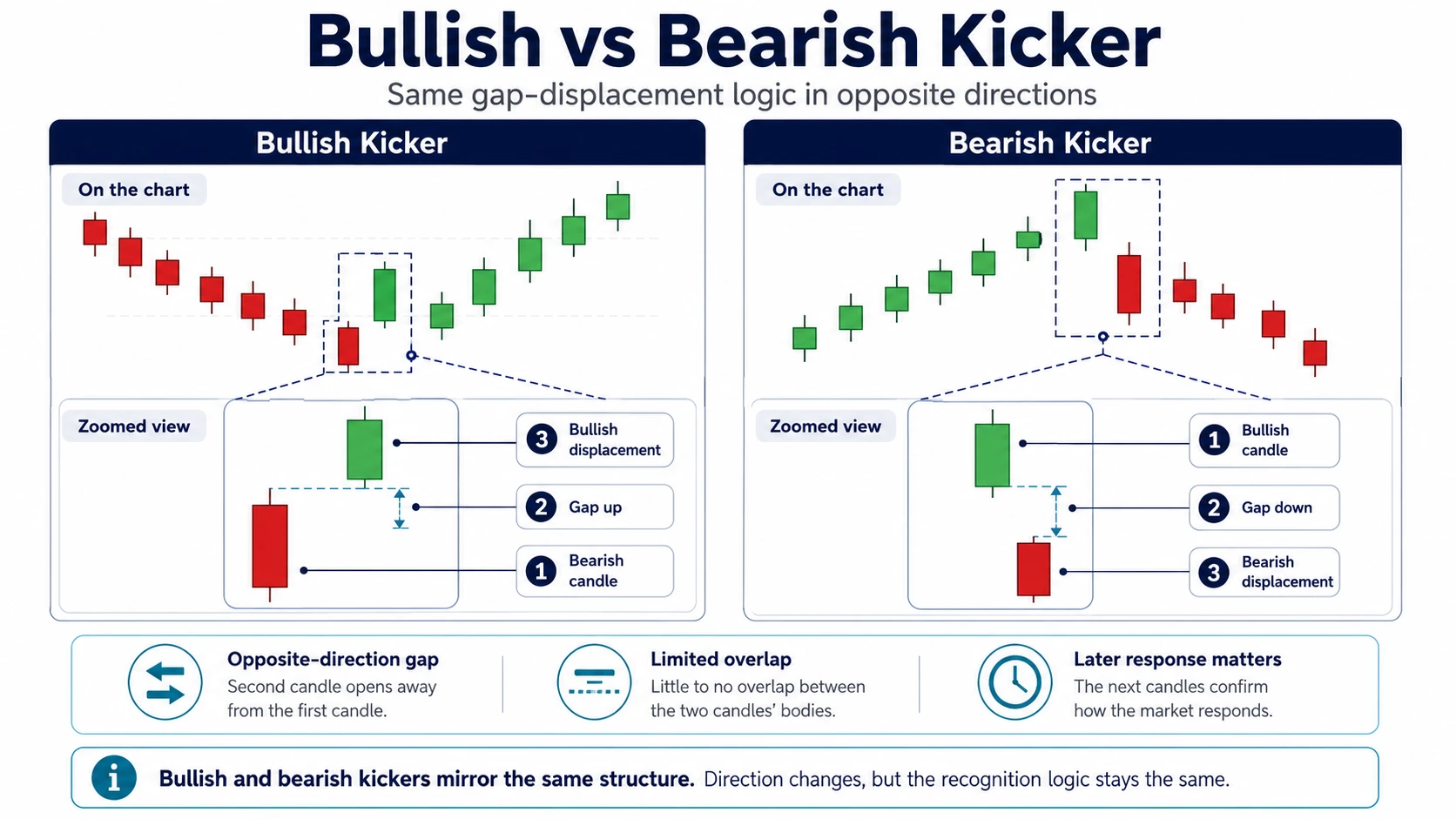
Bullish and bearish kicker candles use the same structure in opposite directions. The difference is the direction of the first candle, the gap, and the second candle’s continuation.
| Variant | Typical structure | Basic interpretation | Main failure clue |
|---|---|---|---|
| Bullish kicker | A bearish candle is followed by a gap up and a strong bullish candle. | Downside pressure is sharply displaced by upside participation. | Price quickly fills the gap and trades back into the prior bearish candle’s range. |
| Bearish kicker | A bullish candle is followed by a gap down and a strong bearish candle. | Upside pressure is sharply displaced by downside participation. | Price quickly fills the gap and trades back into the prior bullish candle’s range. |
Both versions remain conditional. The pattern can show a sharp change in participation, but the market still needs to show whether the new side can maintain the displaced area.
Why the Opening Gap Matters
The opening gap is the reason a kicker candlestick pattern stands apart from many other reversal candles. It shows that the market did not wait for a gradual transition through the prior candle’s range. Price started from a new area and then extended from there.
That separation is also why gap response matters. If the market holds away from the prior candle, the displacement remains visible. If price rapidly returns through the gap, the structure loses much of its force because the new area was not accepted.
Interpretation note: the candle pattern is the visible surface. The gap, the follow-through candle, and the later response explain why the structure may matter.
When the Kicker Reading Weakens
A kicker reading weakens when the market fails to maintain the separation created by the opening gap. The clearest warning is a fast gap fill followed by acceptance back inside the prior candle’s range, because the market has erased the separation that created the kicker structure.
| Weakening behavior | What it suggests | Safer interpretation |
|---|---|---|
| Fast gap fill | The displaced open did not hold. | Treat the structure as unresolved unless price rejects the old range again. |
| Heavy overlap between candles | The structure may be closer to a normal reversal candle or wide-range candle. | Focus on overlap and close location before calling it a clean kicker. |
| Weak second-candle close | The move away from the gap lost pressure before the candle finished. | Later candles need to show whether the gap area remains defended. |
| No meaningful chart location | The pattern may be visually clear but structurally less useful. | Compare the pattern with trend, range boundaries, and nearby reaction areas. |
A quick fill is not a trade-management rule by itself. It is a diagnostic clue that the market did not preserve the separation that made the kicker structure important in the first place.
Kicker vs Similar Candlestick Patterns
A kicker can be confused with other strong candlestick structures because the second candle often looks decisive. The distinction comes from the gap-led displacement, not from candle size alone.
| Pattern or structure | Main feature | Difference from a kicker |
|---|---|---|
| Inverted hammer | A small body near the lower range with a long upper shadow. | It is wick-led, while the kicker is gap-led and uses two candles. |
| Long-legged doji structure | A wide range with open and close near each other. | It reflects expansion and indecision, while the kicker reflects directional displacement. |
| Marubozu-style candle | A strong candle with little or no shadow. | It may show pressure, but it does not require an opposite-direction opening gap. |
| Engulfing-style reversal | The second candle covers or overwhelms the prior candle’s body. | It is based on overlap and body coverage, while the kicker depends on separation. |
Trend location can change how the same gap-led structure is interpreted. A kicker pattern inside an existing trend needs different context than a kicker appearing after a stretched move or near a range boundary.
Kicker Candlestick Pattern Example in Context
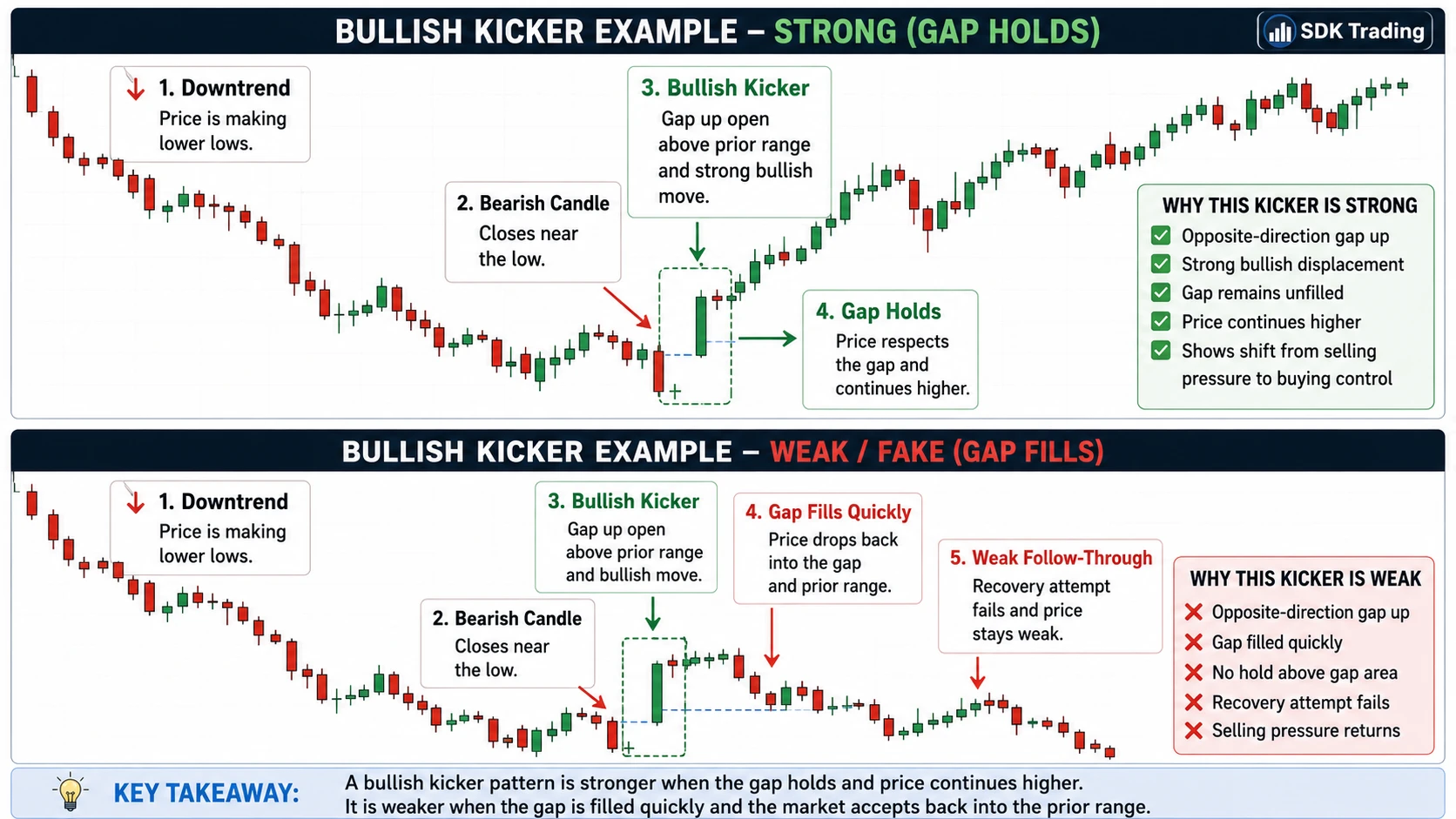
A bullish kicker example usually starts after a short decline, when a bearish candle is followed by a bullish candle opening above the prior range with a visible gap. The structure stands out because price shifts from downside pressure to upside displacement without trading gradually through the prior candle range.
The reading becomes stronger if later candles hold above the gap area or reject only a shallow retest. The reading becomes weaker if price quickly fills the gap, accepts back into the prior bearish candle range, and the next recovery attempt loses momentum.
The key comparison is whether the market preserved the displaced area after the gap or erased it by returning to the earlier candle range.
FAQ
Is a kicker candlestick pattern one candle or two candles?
A kicker candlestick pattern is a two-candle pattern. The second candle opens away from the first candle in the opposite direction, and that opening gap creates the structure.
What makes a bullish kicker different from a bearish kicker?
A bullish kicker usually starts with a bearish candle, then gaps up into a strong bullish candle. A bearish kicker usually starts with a bullish candle, then gaps down into a strong bearish candle.
Why does a quick gap fill weaken a kicker pattern?
A quick gap fill reduces the value of a kicker reading because the market did not maintain separation from the prior candle. The pattern becomes less convincing when price accepts back into the earlier range.
What separates a kicker from an ordinary gap?
A kicker needs opposite-direction displacement from the prior candle. An ordinary gap can open away from the previous price area without creating the same two-candle reversal or repricing relationship.