Cup and Handle patterns raise three different chart questions: whether the structure is a standard Cup and Handle, whether it is the inverted version, or whether the concern is the reliability of an already identified pattern.
Family boundary: use the standard pattern when the chart forms the normal rounded-base structure, the inverted pattern when the geometry is reversed, and the reliability topic when the pattern label is already understood but the question is how the evidence or reported success rate should be interpreted.
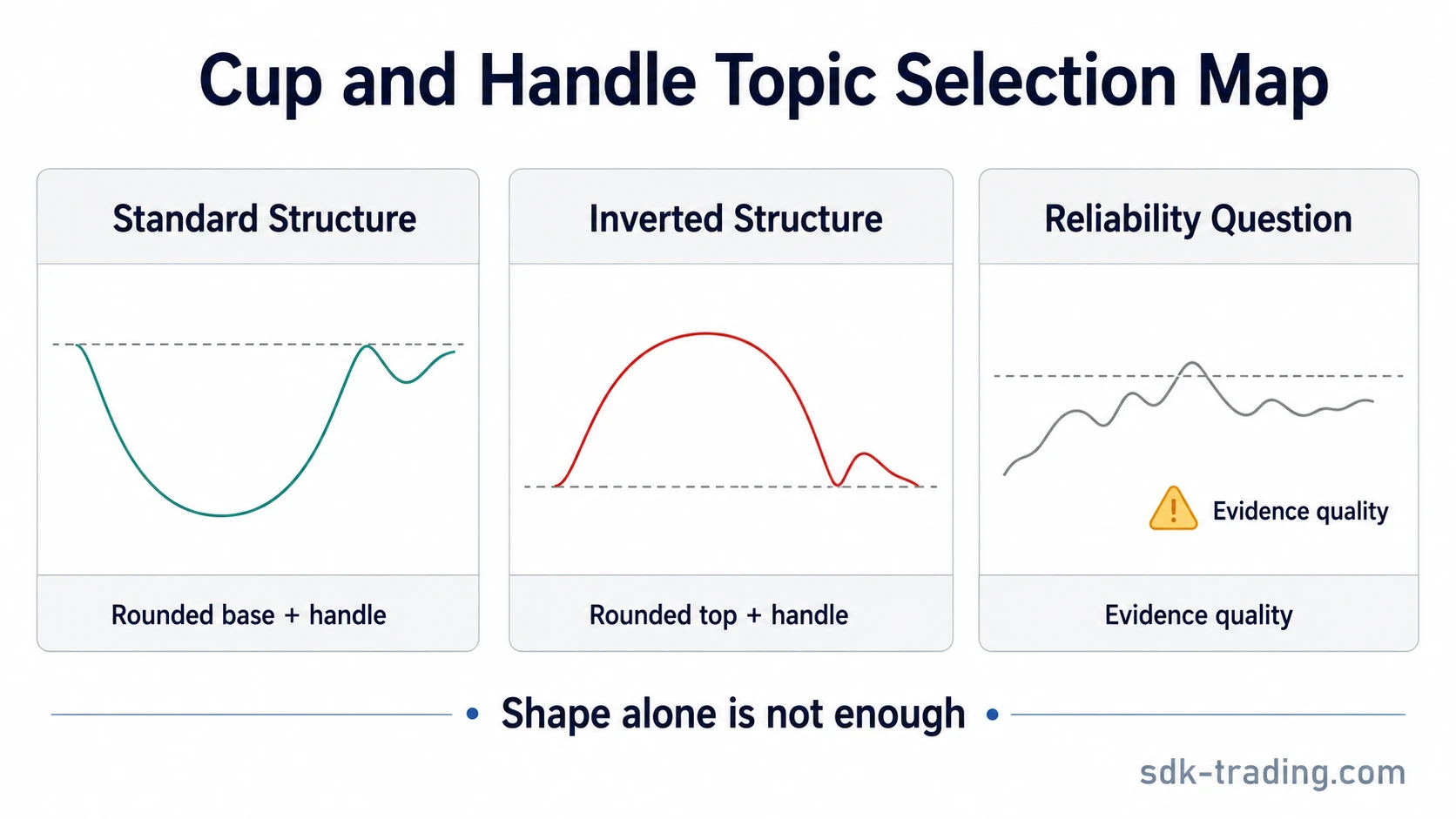
Choose the Right Cup and Handle Topic
Start with the question the chart is creating. The three family pages solve different problems and should not be treated as interchangeable versions of the same explanation.
| Chart question | Best match | What that page resolves |
|---|---|---|
| The chart shows a rounded base, a smaller handle, and a test near the upper boundary. | standard cup and handle pattern | Pattern anatomy, identification, handle structure, rim behavior, and the standard formation. |
| The formation appears upside down, with a rounded top and a handle-like pause. | inverted cup and handle pattern | The inverse geometry and the structural differences from the standard formation. |
| The pattern has already been identified, but the question is how dependable a reported result or success rate is. | pattern reliability | Study rules, success definitions, observation windows, limitations, and interpretation of reported statistics. |
Standard Pattern, Inverted Pattern, or Reliability Question?
The standard and inverted pages answer classification questions. They determine which structural form is present and what features belong to that form.
Reliability is a different layer. It does not establish whether a chart contains a Cup and Handle. It examines how evidence or historical statistics should be interpreted after the pattern definition has been established.
Keeping those questions separate prevents a rounded shape, an inverse formation, and a statistical claim from being treated as if they require the same analysis.
When the Pattern Is Still Unclear
A rounded base by itself does not tell you which deeper question should come next. If the chart is still being classified, start with the pattern structure rather than its reliability.
- Normal orientation: check whether a complete standard structure is developing.
- Reversed orientation: check whether the geometry belongs to the inverted formation instead.
- Pattern already identified: move to reliability only when the question concerns evidence quality, study methodology, or success-rate claims.
Routing rule: identification comes before reliability. A statistical question cannot resolve an unfinished pattern classification.